
An emergency fund is money you keep aside for things you didn’t see coming and can’t skip: the car breaks down, a medical bill shows up, work dries up for a month. It’s the difference between a stressful week and three years of paying off a credit card.
Here’s how much to aim for, where to keep it, and how to build one when money’s already tight.
How much do you need?
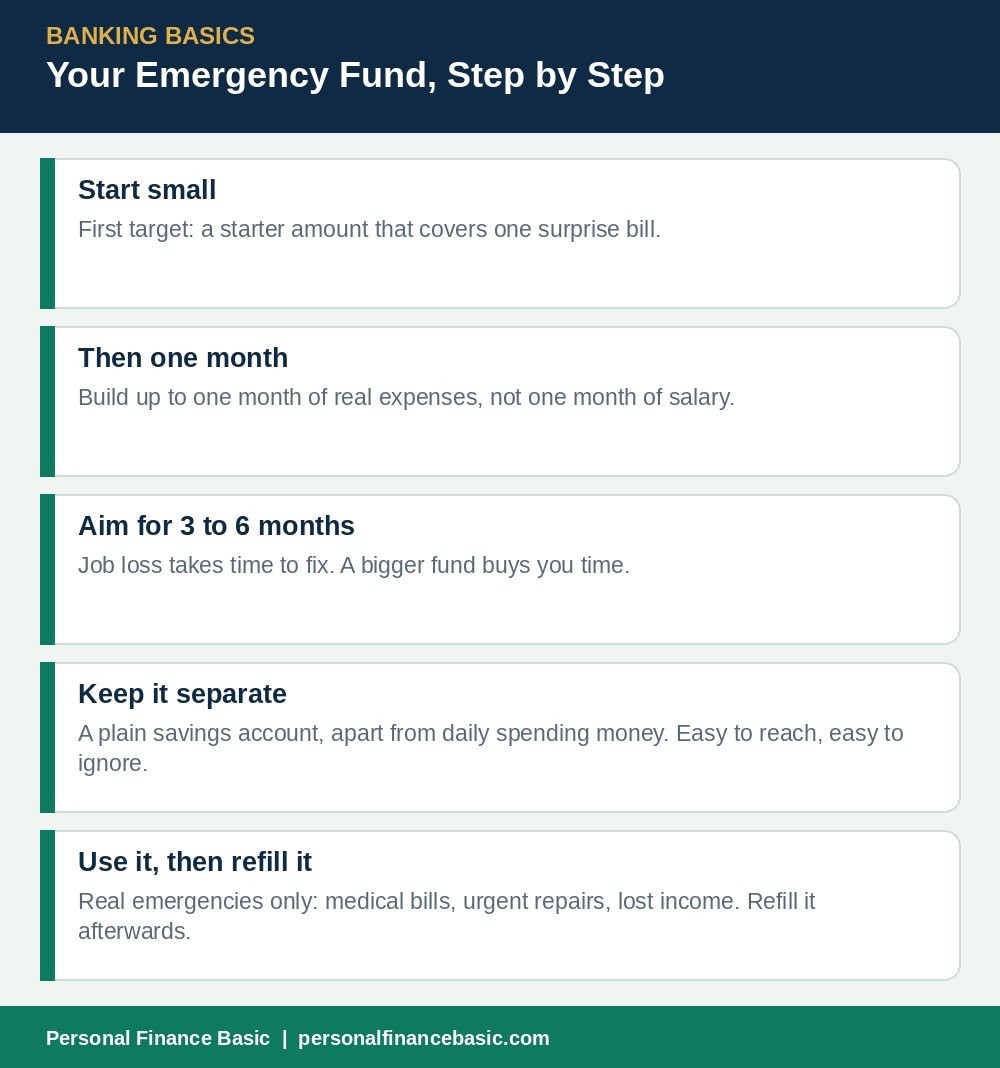
The usual guideline is three to six months of essential expenses. That means the bills you’d still have to pay if you lost your income: housing, utilities, food, insurance, transportation and minimum debt payments. Not your full spending, just the basics.
| Essential expenses per month | 3 months | 6 months |
|---|---|---|
| $2,000 | $6,000 | $12,000 |
| $3,000 | $9,000 | $18,000 |
| $4,000 | $12,000 | $24,000 |
Lean toward six months or more if you’re self-employed, your income is irregular, you’re the only earner, or your industry has regular layoffs. Having run my own business for years, I’d go bigger rather than smaller if your income isn’t steady. Slow months happen.
Three months may be enough if you have a stable job, two incomes in the household, and low fixed costs.
If those totals look impossible right now, ignore them for the moment. Start smaller.
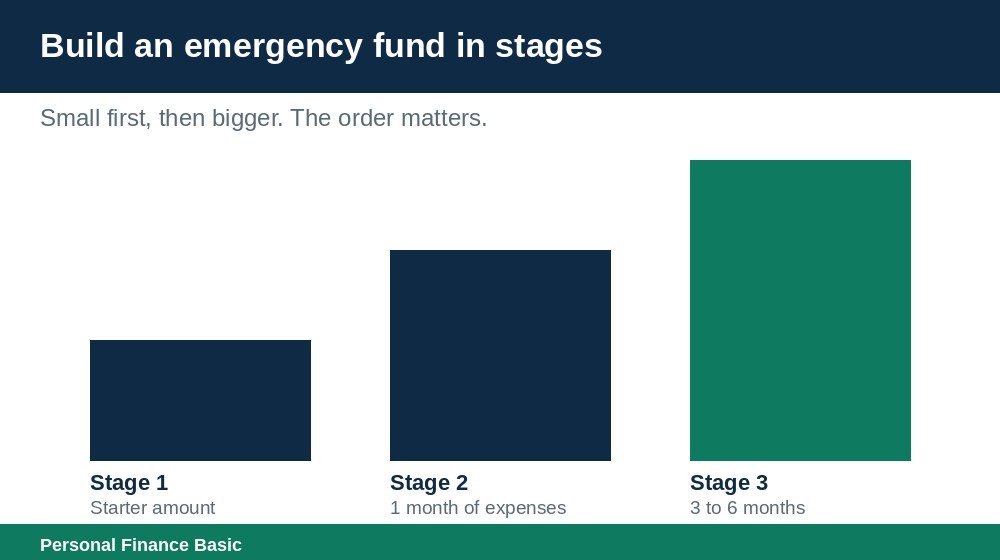
Start with $1,000
A starter fund of $500 to $1,000 covers a lot of common surprises, like a car repair or an urgent care visit. It’s also reachable in a few months for most people, and getting there makes the bigger goal feel possible.
Keep it in a separate account
If your emergency money sits in your everyday checking account, it’ll slowly get spent. Open a separate account just for this.
A high-yield savings account at an FDIC-insured bank (or an NCUA-insured credit union) is usually the best home for it. Your money is protected, you can get to it in a day or two, and it earns noticeably more interest than a standard savings account. A money market account is another good option.
Don’t invest your emergency fund in stocks. The market tends to drop at the same time people lose jobs, which is the worst time to have to sell.
Ways to build it faster
Automate it. Set a transfer for payday, even if it’s $25. You won’t have to remember, and you won’t have to decide each month.
Find one or two things to cut. An unused subscription, a cheaper phone plan, a couple fewer takeout meals. Send the difference straight to the fund. There are 30 ideas in this list of ways to save money every month.
Save surprise money. Tax refunds, bonuses, birthday cash, money from selling stuff you don’t use. Putting even half of it toward your fund makes a big dent.
Use a budget. It’s much easier to find $100 a month when you can see where the money’s going. Start with how to make a budget.
What counts as an emergency?
Ask three questions: Is it unexpected? Is it necessary? Is it urgent? If all three are yes, use the fund. That’s what it’s for, and you shouldn’t feel guilty about it.
Things you can predict, like holiday gifts, annual insurance or a vacation, aren’t emergencies. Save for those separately.
After you use it, go back to saving until it’s full again.
Emergency fund or debt first?
A common approach is to build the starter $1,000 first, then focus hard on high-interest debt, then come back and build the full three to six months. The small cushion keeps a surprise bill from going back on the credit card while you’re paying it down. If you’re working on debt, here’s how the debt snowball and avalanche compare.
At a glance
Quick questions
How long will it take?
At $300 a month, you’d have $1,000 in a little over three months and $9,000 in about two and a half years. Interest, windfalls and side income can speed that up.
Is $1,000 enough?
It’s a solid start, but it won’t cover a job loss. Treat it as the first milestone.
Can I keep it in cash at home?
A small amount for something like a power outage is fine. Keep the rest in an insured account, where it’s safer and earns interest.
I’m not a financial advisor, and this post is general information, not advice for your situation. More in the disclaimer.
Comments
3 responses to “How to build an emergency fund (even on a tight budget)”
[…] so a sudden bill does not force you to stop the SIP or sell units at a bad time. Our guide on how to build an emergency fund explains a simple way to […]
[…] whole plan. Once you have a little extra coming in, a budget helps you decide where it goes, and an emergency fund is a sensible first home for it, before lifestyle spending grows to match […]
[…] aside first, so a sudden bill does not force you to sell investments at a bad time. Our guide to how to build an emergency fund explains how to start with a small starter fund and build from there. A starter fund of $500 to […]