If detailed budgets make your eyes glaze over, the 50/30/20 rule might be a better fit. You split your take-home pay into three buckets and stop worrying about every little category.
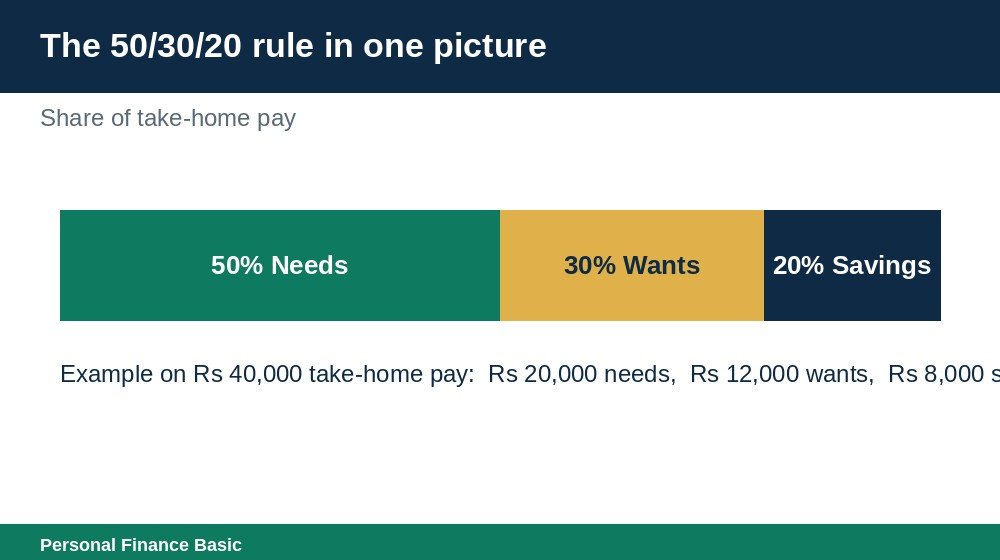
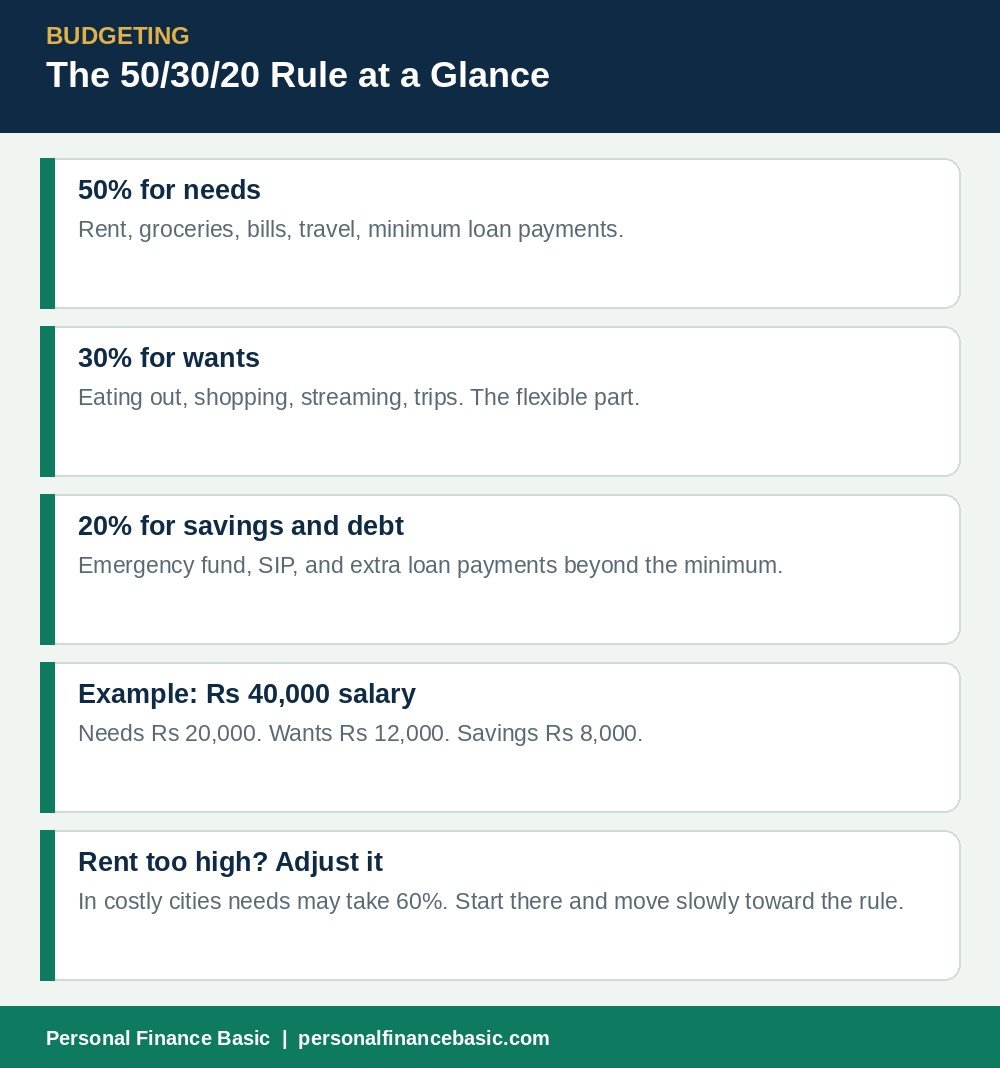
- 50% goes to needs
- 30% goes to wants
- 20% goes to savings and paying off debt
The idea comes from Elizabeth Warren and her daughter Amelia Warren Tyagi, who described it in their 2005 book All Your Worth. It’s been around a long time because it’s easy to remember and easy to check.
Start with take-home pay
The percentages are based on what lands in your bank account after taxes. If health insurance or 401(k) contributions come out of your paycheck automatically, you can add those back in and count them in the right bucket: insurance as a need, retirement as savings.
What counts as a need?
Things you have to pay to live and keep working. Rent or mortgage, utilities, basic groceries, insurance, getting to work, childcare, and the minimum payments on your debts.
The tricky part is that a lot of needs have a “want” version. You need a phone; you don’t need the newest one. You need groceries; the fancy snacks are optional. Be a little strict with yourself here.
What counts as a want?
Everything that makes life nicer but isn’t required. Eating out, streaming, travel, hobbies, new clothes you don’t strictly need, gym memberships, upgrades. A simple test: if you could go a few months without it, it’s a want.
This bucket is also what makes the rule sustainable. Thirty percent is a real amount of money, and it’s yours to spend without guilt.
What goes in the 20%?
Your future. An emergency fund, retirement accounts, savings for a down payment or other goals, and any debt payments above the minimum.
Minimum payments are needs. Anything extra you throw at a credit card or loan counts here.
What it looks like at different incomes
| Take-home per month | Needs (50%) | Wants (30%) | Savings and debt (20%) |
|---|---|---|---|
| $2,500 | $1,250 | $750 | $500 |
| $3,500 | $1,750 | $1,050 | $700 |
| $5,000 | $2,500 | $1,500 | $1,000 |
| $7,500 | $3,750 | $2,250 | $1,500 |
Take someone bringing home $4,000. Needs get $2,000: rent at $1,200, utilities $150, groceries $350, car insurance and gas $200, and a $100 student loan payment. Wants get $1,200 for eating out, shopping, a gym membership and a travel fund. The last $800 splits between an emergency fund, a Roth IRA and an extra $100 on the student loan.
They don’t have to track every coffee. They just check once a month that each bucket stayed close to its number.
When your needs are way over 50%
This is common, especially in expensive cities or on a tighter income. If rent alone is 40% of your pay, hitting 50% for all needs isn’t realistic right now.
That’s okay. Use 60/20/20 or even 70/20/10 for a while. Trim wants before you trim savings, if you can. Then work on the big levers over time: a roommate, cheaper insurance, refinancing, or earning more. As things improve, move back toward 50/30/20.
Is it the right budget for you?
It works well if you want something simple and flexible, if you’re new to budgeting, or if you’ve quit detailed budgets before.
It’s less ideal if you have a lot of high-interest debt (20% may be too slow), if you started saving for retirement late, or if you like knowing exactly where each dollar goes. In those cases, a more detailed budget might suit you better. Some people use 50/30/20 as the big picture and a detailed budget inside each bucket.
A few tips that make it easier
Automate the 20%. Set up a transfer to savings on payday so it happens before you can spend it.
Try separate accounts. One checking account for bills, a second one (or a debit card) for wants, and a high-yield savings account for savings. You can see at a glance how much fun money is left.
When you get a raise, send at least half of the increase to the savings bucket. You won’t miss money you never got used to.
At a glance
Quick questions
Is it based on gross or net pay?
Net, meaning your take-home pay.
Where does a credit card payment go?
The minimum goes in needs. Anything extra goes in the 20%. If you’re deciding which debt to tackle first, compare the debt snowball and debt avalanche.
Do I need to hit the percentages exactly?
No. They’re a target, not a test. Being close is the point.
I’m not a financial advisor, and this post is general information, not advice for your situation. More in the disclaimer.