A side hustle does not have to start with a loan, a course, or a garage full of stock. The cheapest ones start with something you already own: a skill, some spare hours, or things sitting unused in your home. This guide lists ten that fit that test, explains how each one pays, and covers the tax basics that catch beginners by surprise.
The rule for “no money”
Every hustle below passes the same test: you can take the first step today without paying for anything. That rules out opening a shop, buying inventory to resell, or paying for ads. It does not rule out ideas that use things you already have, like a car or a phone.
There is one honest exception to watch for. Some platforms charge a commission or a listing fee once you sell, which is fine: the fee comes out of money you already earned. What you should avoid is paying upfront for the promise of work, such as a starter kit or a paid “lead list.” Real clients pay you. You do not pay to reach them.
The 10 side hustles
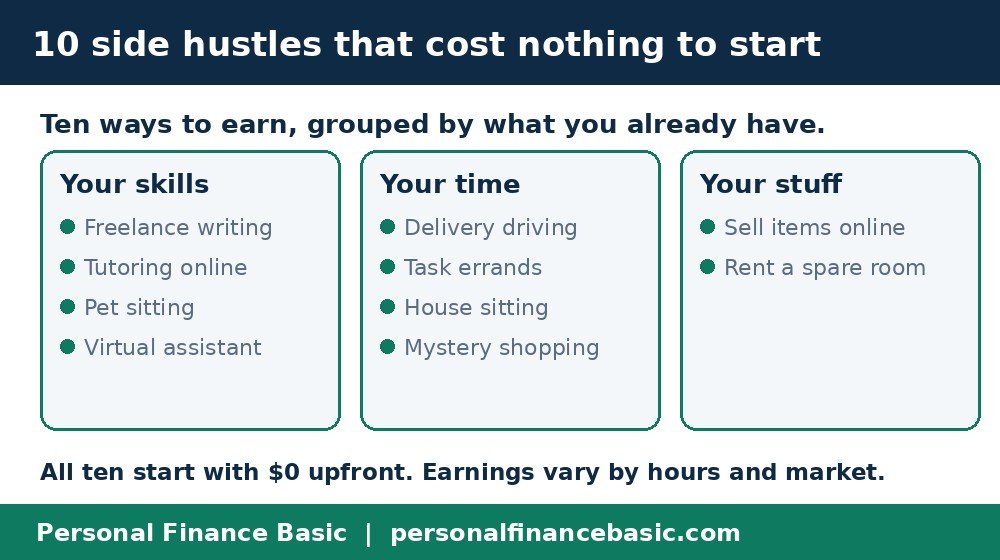
Ten ways to earn, grouped by what you already have. All ten start with $0 upfront.
1. Freelance writing
If you can write a clear email, you can write for small businesses, blogs, and newsletters. Beginners start with short articles and social posts, paid per piece or per word, with a free portfolio page of three or four samples.
2. Tutoring online
School subjects, test preparation, music, and languages all sell by the hour over video calls. Most platforms let you list for free. School math and reading are steady work, while test prep and specialist subjects pay more.
3. Pet sitting and dog walking
Pet owners pay for walks, feeding visits, and overnight stays. Listings and pet-care platforms are free to join, and repeat clients are the norm once owners trust you.
4. Virtual assistant work
Small businesses hire remote help for email, scheduling, data entry, and social media. It is ordinary office work done from home, paid hourly, and one steady client can fill several hours a week.
5. Delivery driving
Food and grocery apps accept drivers with a car, insurance, and a phone. You choose your hours and are paid per delivery plus tips. Track miles and fuel from the start, because vehicle costs decide whether this makes a profit.
6. Task errands
Task platforms connect you with people who need furniture assembled, a room painted, or boxes moved. If you already own basic tools, the work pays by the job, and good reviews bring repeat bookings nearby.
7. House sitting
Homeowners pay someone trustworthy to stay in their home while they travel and keep the place lived in. Listings are free, and the work suits flexible schedules. It pays less per hour than skilled work, but can include free accommodation.
8. Mystery shopping
Companies pay shoppers to visit stores or restaurants and report on service. Jobs are small and irregular, so this is pocket money rather than income, but registration is free and some assignments include a free meal or product.
9. Sell items you already own
Clothes, electronics, books, and furniture sitting unused are stock you already paid for. Listing on a marketplace is free, fees come out of the sale price, and checking what similar items actually sold for sets a fair price.
10. Rent a spare room
If you have a spare room and your lease or mortgage allows it, renting it to a lodger or short-term guest can be the largest earner on this list. Check local rules and your lease first, and agree house rules in writing.
How to get your first client
The fastest route is people you already know. Tell friends, family, and coworkers exactly what you offer and what it costs. A message like “I am taking on two dog-walking clients on weekday mornings, $15 a walk” gets replies. A vague announcement like “I am starting a business” gets none.
Second, list where buyers already look: community boards, marketplace apps, and the platforms for your type of work, with a clear headline, a real photo, and a price. Third, do the first job well and ask for a review or a referral.
Do not spend your first month building a website or designing a brand. Those jobs feel like progress, but they earn nothing. Your first paying customer is the only milestone that matters at the start.
What to charge
Beginners usually undercharge. A simple rule: find what others in your area charge for the same work, then start near the lower end, not below it. A dog walker charging $12 when the local rate is $20 will fill up fast and burn out faster.
Tax basics for side income
All side income is taxable, even if no one sends you a tax form. If you earn $400 or more in net self-employment earnings in a year, that is income minus business costs, you must file a return and pay self-employment tax: 15.3% of 92.35% of net earnings, covering Social Security and Medicare.
As a rough example, $5,000 of net side earnings means about $706 in self-employment tax, plus income tax on top at your own rate. Many side earners put aside 25 to 30% of each payment in a separate account so tax time brings no surprise.
If you expect to owe $1,000 or more in tax for the year, the IRS generally expects quarterly estimated payments. Missing them can mean a penalty. Check the IRS website or a tax professional for the rules in your situation. Clean records from the first payment make all of this far easier.
Mistakes that cost money
Paying for courses, tools, or advertising before you have earned anything is the most common waste. Earn first, then reinvest a share of what came in. Underpricing is a slower loss: if every hour earns less than the costs behind it, such as fuel or platform fees, you are paying to work. Review your real hourly earnings after your first ten jobs and adjust your prices.
At a glance
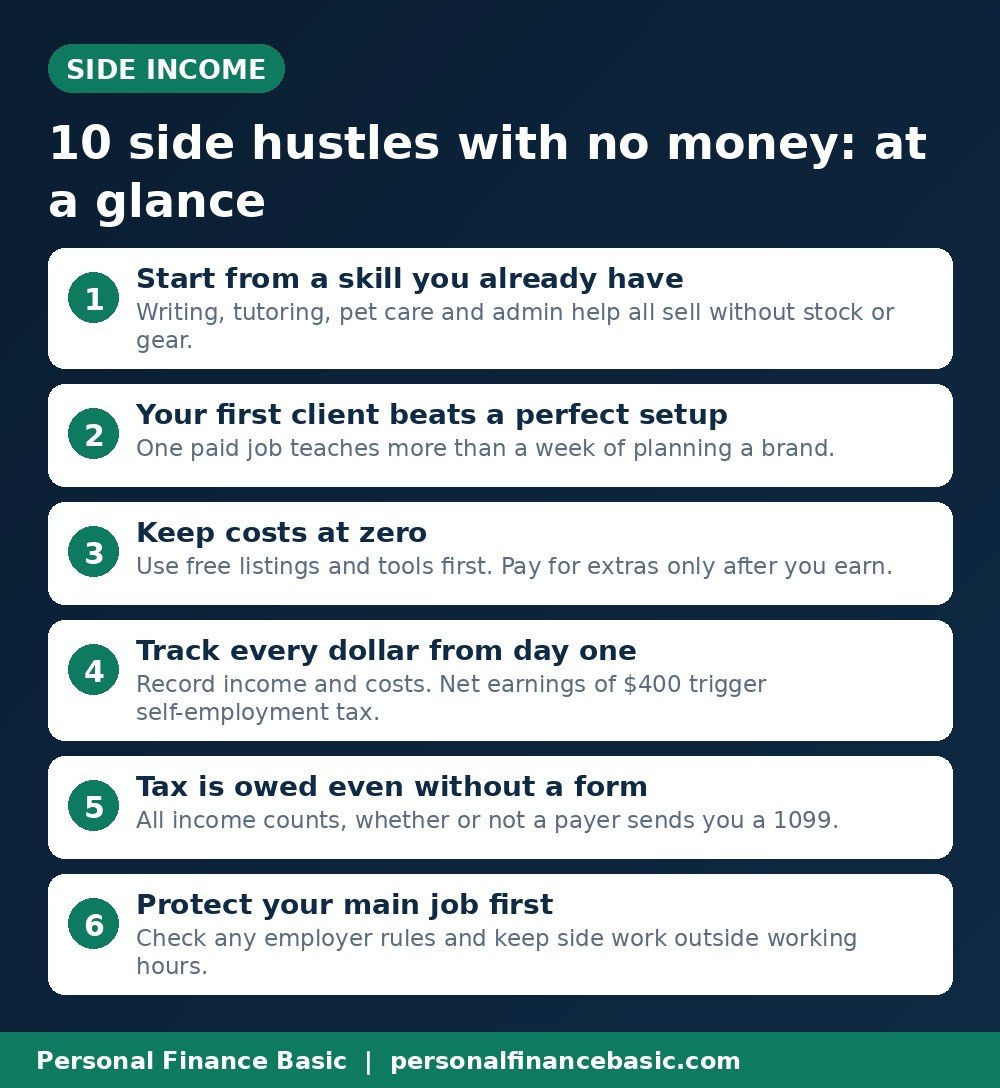
The main points from this guide, in one picture.
Frequently asked questions
Can I really start with no money at all?
Yes, for the hustles on this list. They use skills, time, or things you already own. Some have costs once you earn, such as a platform fee taken from a sale, but none require payment before your first job.
How much can I earn from a side hustle?
It depends on the hustle, your hours, and your market. A few hours a week of dog walking or tutoring can add a few hundred dollars a month.
Do I need to register a business?
Most people start as a sole proprietor, which in most cases needs no registration to begin earning. Some cities require a business license for certain work, and renting a room has local rules, so check your city and state requirements first.
What if my employer does not allow side work?
Check your employment contract and handbook rules first. Some employers restrict outside work or work for competitors. When in doubt, ask, and keep side work outside working hours.
When should I quit my job for a side hustle?
Not until the hustle replaces your income for several months in a row, after costs and taxes, with an emergency fund in place. One good month is not yet a business.
This guide is general education, not financial or tax advice. Tax rules change and depend on your situation, so check IRS.gov or speak with a qualified tax professional. Earnings examples are illustrations, not promises.
Related reading: How to Budget on a Biweekly Paycheck and Best Ecommerce Platforms in the USA for Beginners (2026)