Most homes hold hundreds of dollars in things nobody uses: a jacket that never fit, a phone in a drawer, a coffee table from a move ago, books read once. Selling them online turns clutter into cash, and you do not need a business, stock, or money to start.
The plan is simple: pick what to sell, choose where to list it, price it from real sales, take honest photos, and handle payment and handover safely. This guide walks through each step, with the fees spelled out so you know what you keep.
What to sell first
Start with a sweep of the obvious places: closets, the garage, the bookshelf, the drawer of old electronics. Anything in good working order that you have not used in a year is a candidate. Clothes with tags still on, phones and tablets that still turn on, small furniture, board games, and tools sell well.
Skip broken items, recalled products, and anything you cannot describe honestly. A buyer who finds a hidden fault will ask for a refund. If an item needs a repair you will not do, say so in the listing or leave it out.
Set a target for the first round: ten items. Ten listings teach you the whole process, from photos to payout. A $15 shirt, a $40 pair of shoes, a $60 phone, and a $25 lamp is $140 from things that were sitting in a closet.
Where to sell it
Facebook Marketplace is the easiest start for bulky things. A buyer collects the item and pays you in person, with no selling fee on local pickup. For shipped sales through Marketplace checkout, the fee is 10% of the sale, with a minimum of $0.80.
eBay reaches buyers across the country and works well for electronics, collectibles, and anything with a clear model number. The fee is higher: about 13.6% of the total sale plus $0.40 per order on most categories, charged on the item price plus shipping and tax. eBay gives you 250 free listings a month without a store.
Mercari is built for shipping smaller items like clothes and shoes, and it charges 10% of the item price plus buyer-paid shipping. Pick one place for your first ten items instead of listing everywhere at once.
What the fees really cost
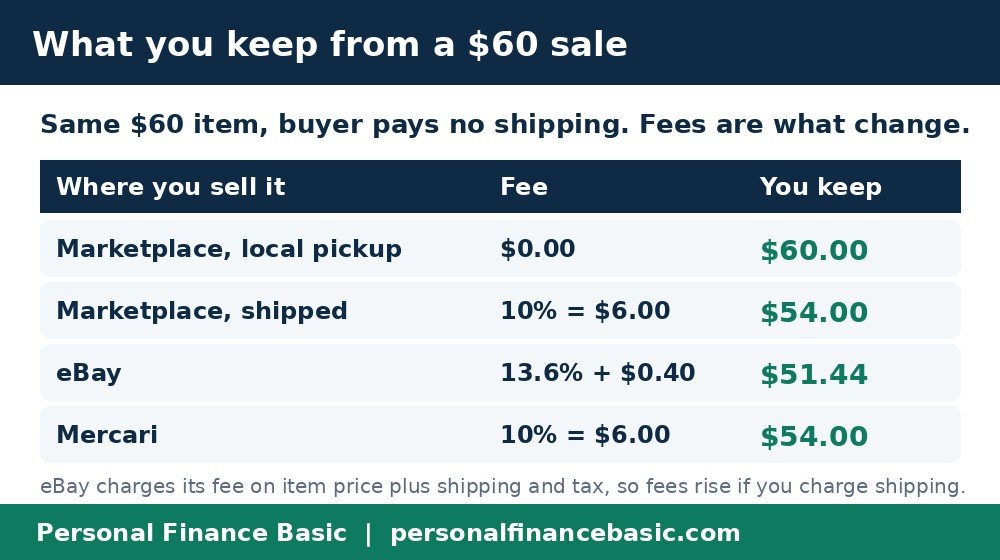
What you keep from a $60 sale, before shipping costs. Local pickup keeps the most.
The same $60 item keeps a different amount depending on where it sells. Local pickup keeps the full $60. A shipped Marketplace sale keeps $54 after the 10% fee. eBay keeps $51.44 after its 13.6% fee plus $0.40.
Fees are only part of the cost. Shipping supplies, the box, and the trip to the post office all come out of what you keep, and eBay charges its fee on the shipping the buyer pays too. That is why local pickup is worth trying first for anything heavy.
Check the fee page for the platform you use before you price an item. Fees change, and some categories charge different rates. Work out what you keep before you list.
Price it from sold listings, not asking prices
Asking prices are wishes. Sold prices are facts. On eBay, search for your item, open the filters, and tick the box for sold listings. You will see what buyers actually paid in the last few weeks.
Price near the middle of recent sales if your item is in average condition, a little higher if it is like new with the box, a little lower if it shows wear. Round numbers sell better than odd ones: $25 moves faster than $23.50.
If nothing sells in two weeks, the price is the problem, not the item. Cut it by 10 to 20% and relist with a fresh photo.
Photos and a listing that sell
Buyers decide from the photos. Use daylight near a window, a clean background like a plain wall or a white sheet, and take every angle: front, back, sides, labels, and any flaw up close. A flaw shown honestly builds trust.
Write the listing like a buyer reads it: brand, model, size, color, condition, and what is included. Measure clothes instead of guessing the size, and test electronics before you list them.
Answer questions fast. Most buyers message two or three sellers and buy from the one who replies first.
Shipping and safe meetups
For local sales, meet in a public place in daylight: a store parking lot, a police station lobby, or a busy cafe. Bring a friend if the item is valuable, and take cash or a payment you can confirm on the spot. Never ship an item before the payment has cleared.
For shipped sales, weigh the packed item before you set the shipping price, and use the platform’s label when it offers one. Pack so the item survives a drop: wrap it, fill the gaps, and tape every seam.
Ship within two days of the sale. Slow shipping is the fastest way to a bad review, and a bad review makes every future listing harder to sell.
The tax part, in plain terms
Selling your own used things for less than you paid is usually not taxable income. A jacket you bought for $80 and sold for $25 is a loss, and a loss on a personal item is not taxed and cannot be deducted.
Selling for a profit is different. A collectible bought for $20 and sold for $60 is a $40 gain, and gains are taxable. If you start buying items to resell for a profit, that is a business, and the income counts whether or not you get a tax form.
Payment platforms send a Form 1099-K only when your payments cross $20,000 and more than 200 transactions in a year, under the federal rule restored in 2025. Some states set lower thresholds. Keep a simple record anyway: what you sold, what it sold for, and what you paid for it.
At a glance
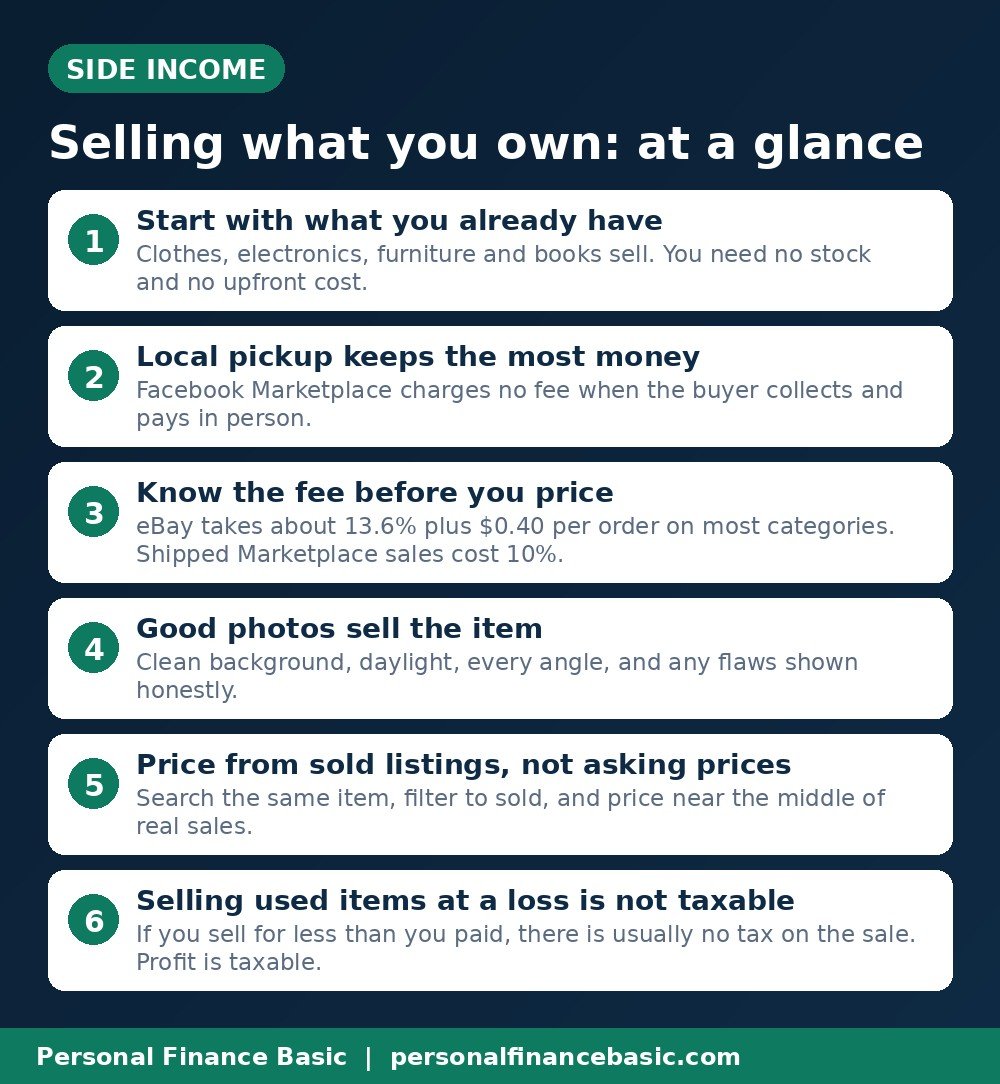
The main points from this guide, in one picture.
Frequently asked questions
What sells fastest online?
Clothes in good condition, working phones and tablets, small furniture, books, and tools. Items with a clear brand and model number sell fastest.
Which platform is cheapest for a beginner?
Local pickup on Facebook Marketplace: no selling fee when the buyer collects and pays in person. For shipped sales, Marketplace and Mercari both charge 10%, while eBay charges about 13.6% plus $0.40 per order on most categories.
How do I price something I have never sold before?
Search for the same item on eBay, filter to sold listings, and price near the middle of what buyers actually paid. Price a little higher if it is like new with the box, a little lower if it shows wear.
Is it safe to meet a buyer in person?
Meet in a public place in daylight, such as a store parking lot or a police station lobby. Bring a friend for valuable items, take cash or a payment you can confirm on the spot, and never invite a buyer into your home.
Do I have to pay tax on what I sell?
Usually not if you sell your own used things for less than you paid. A profit is taxable, and buying items to resell for a profit counts as business income. Keep a record of what you sold, what you sold for, and what you paid for it.
This guide is general education, not financial advice. The right amounts depend on your income, costs, and goals. Consider speaking with a qualified financial adviser about your own situation.
Related reading: 10 Side Hustles You Can Start With No Money in the US and Best Ecommerce Platforms in the USA for Beginners (2026)