On Tuesday, November 10, 2026, Social Security sends the November payment to people born on the 1st through the 10th of the month. The money arrives one day earlier than the usual schedule. If your birthday falls in that range, check your bank account today.
The early arrival is routine. The Social Security Administration moves a payment to the previous business day when the scheduled date falls on a federal holiday, and Wednesday, November 11 is Veterans Day. This guide explains who gets paid today, the full November schedule, and what the 2027 raise means for your check.
Who gets paid today
Today’s payment goes to retirement, survivors, and disability beneficiaries who were born on the 1st through the 10th of any month. It also covers people who started receiving benefits after April 1997. That is how the Social Security Administration groups its monthly payments: by birth date, in three groups spread across the month.
The payment is your normal November benefit. The amount is the same as last month. Nothing has been added and nothing has been taken away. The only change is the date it lands in your account.
Why the payment moved by one day
Under the normal schedule, this group would be paid on Wednesday, November 11. That date is Veterans Day, a federal holiday. Banks are closed, and Social Security offices are closed too.
When a payment date falls on a federal holiday or a weekend, the Social Security Administration pays on the business day before it. That is why the money arrives on Tuesday, November 10 instead. The rule is the same every month. It is not a special payment and it is not an advance on December. Your December payment will arrive on its own scheduled date.
If your payment normally arrives by direct deposit, it should show in your account on November 10. If you still receive a paper check, allow a few extra days for mail delivery.
The full November schedule
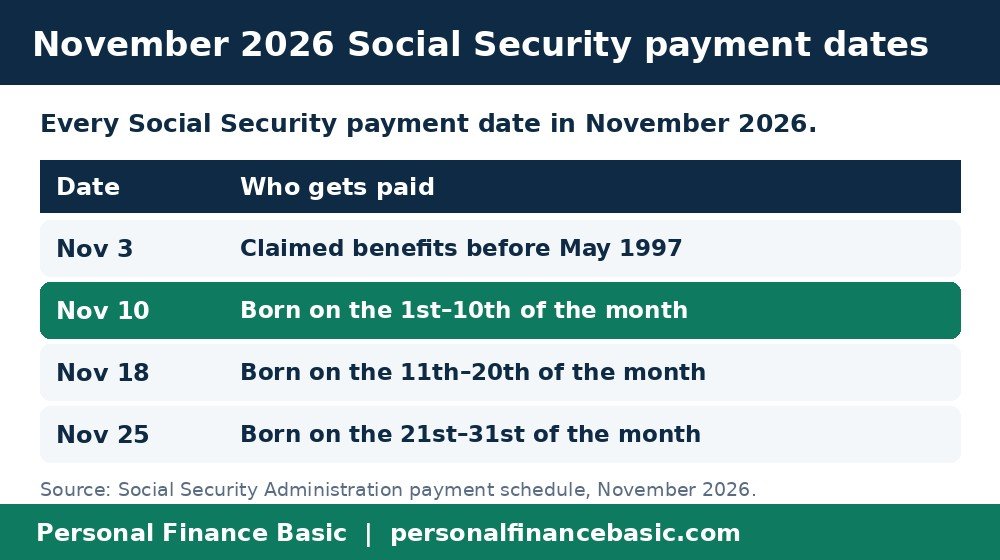
The November 2026 payment dates, by birth date. The November 10 payment is the one moved early for Veterans Day.
The first payment of the month went out on November 3. That group covers people who claimed benefits before May 1997, and people who receive both Social Security and Supplemental Security Income. The remaining two groups follow the usual pattern: November 18 for birthdays on the 11th through the 20th, and November 25 for birthdays on the 21st through the 31st.
Your birth date decides your group, not the date you retired. Once you are in a group, your payment day stays the same month after month, unless a holiday or weekend moves it by a day.
The 2027 raise does not start today
The Social Security Administration announced on October 14, 2026 that benefits will rise by 3.6% in 2027. That is the cost-of-living adjustment, and it works out to about $75 a month for the average retiree, according to the agency.
That raise does not apply to the payment arriving today. November’s payment is still at the 2026 rate. The higher amount starts with benefits paid in January 2027. If you see stories this week about a bigger check, they are talking about January, not November.
The same warning applies to claims seen on some blogs about a $200 extra payment. No such payment was announced by the Social Security Administration, and the November payment arriving today is your regular benefit, one day early.
A note on Supplemental Security Income
Supplemental Security Income, known as SSI, runs on a different schedule. SSI is normally paid on the 1st of the month. Because November 1, 2026 was a Sunday, the November SSI payment arrived on Friday, October 30 instead. That is the same rule at work: when the 1st falls on a weekend or a holiday, the payment moves to the business day before it.
What to do if your payment does not arrive
First, check the date for your group in the table above. If your birthday is on the 11th or later, your payment is not due today. It comes on November 18 or November 25.
If your group was due today and the money is not there, wait one full business day. Direct deposits can post at different times during the day depending on your bank. If it is still missing after that, call the Social Security Administration at 1-800-772-1213, or sign in to your my Social Security account to check your payment status. Never share your Social Security number in reply to a text or email about a payment. The agency does not ask for it that way.
At a glance
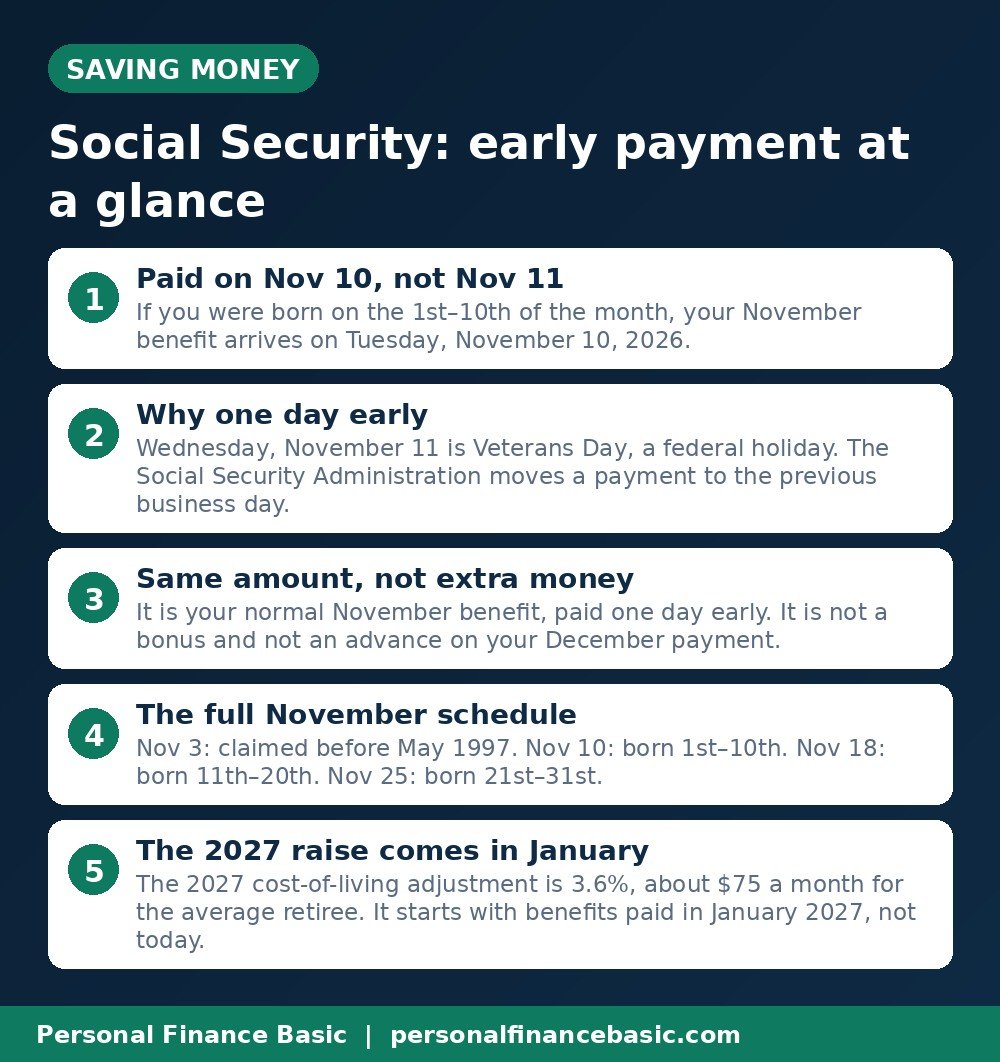
The main points from this guide, in one picture.
Frequently asked questions
Why did my Social Security payment arrive a day early?
Your scheduled payment date, Wednesday, November 11, is Veterans Day, a federal holiday. The Social Security Administration moves payments that fall on a holiday to the previous business day, so the money arrived on Tuesday, November 10.
Is the early payment extra money?
No. It is your normal November benefit, paid one day early. The amount is the same as your October payment. It is not a bonus, and it is not an advance on your December payment.
Who gets paid on November 10?
People born on the 1st through the 10th of the month who claimed benefits after April 1997. People who claimed before May 1997 were paid on November 3. Birthdays on the 11th through the 20th are paid on November 18, and birthdays on the 21st through the 31st are paid on November 25.
When does the 2027 cost-of-living raise start?
The 3.6% raise, announced by the Social Security Administration on October 14, 2026, starts with benefits paid in January 2027. It is about $75 a month for the average retiree. November’s payment is still at the 2026 rate.
What if my payment is late?
Wait one full business day, since deposit times vary by bank. If it is still missing, call the Social Security Administration at 1-800-772-1213 or check your my Social Security account online. Do not share your Social Security number in response to a text or email about a payment.
This guide is general education, not financial advice. The right amounts depend on your income, costs, and goals. Consider speaking with a qualified financial adviser about your own situation.
Related reading: How to Budget on a Biweekly Paycheck and How Much Emergency Fund Do You Need? (With Examples)