
Earning your first freelance income online sounds harder than it is. The work itself is usually the easy part. The hard part is deciding what to offer, showing proof that you can do it, and finding one person willing to pay. This guide walks through those steps in order, so you can go from no clients to a first paid job without guessing.
Start with a realistic expectation. The first job is rarely large or well paid. Its real value is proof: a finished piece of work, a happy client, and something you can show the next person. Money follows proof, not the other way round.
Pick one skill and one narrow service
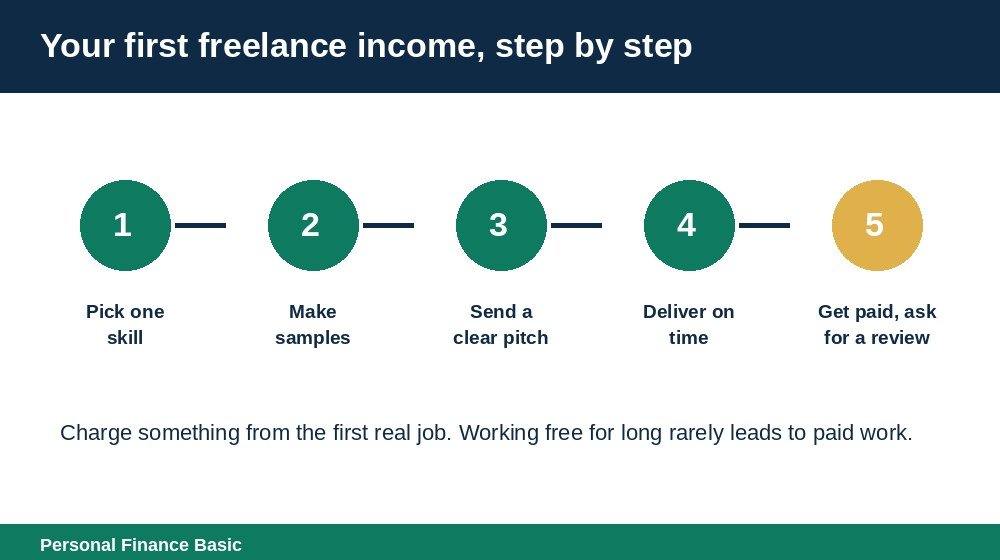
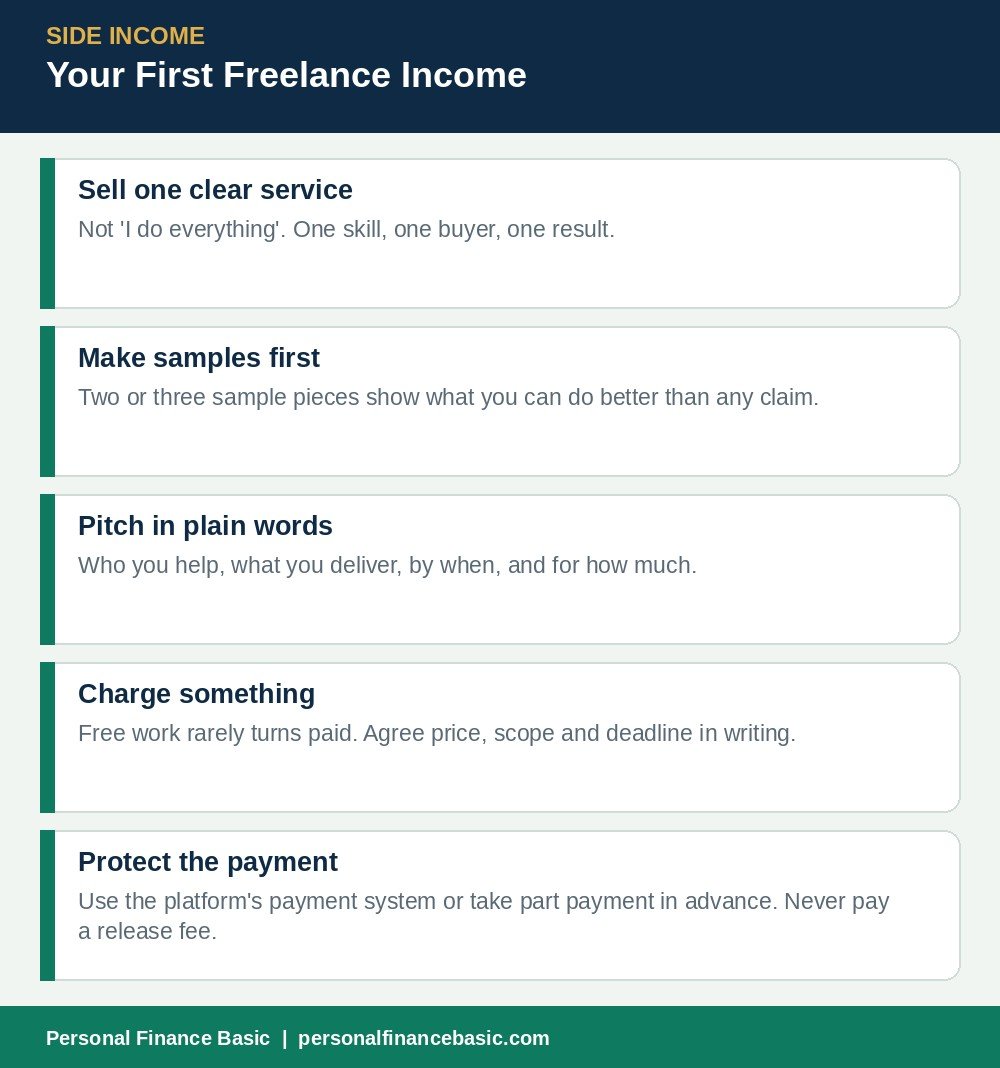
Choose one marketable skill you already have, such as writing, design, video editing, spreadsheets or coding. Then narrow it to one service for one type of client. “I will edit short videos for shop owners” is an example of a narrow service. It is clear, easy to understand, and easy for a client to say yes to. “I do everything digital” is not.
Narrowing feels risky, because it seems to turn work away. In practice it does the opposite. A client with a specific need trusts a specialist more than a generalist, and a narrow offer is far easier to describe to others, which is how referrals start.
Make two or three sample pieces
Before you look for clients, make two or three sample pieces that show the exact service you plan to sell. If you edit videos, cut two short example videos. If you write, write two short articles on topics your clients care about. If you design, make two posters or social media graphics. Use realistic examples, not placeholders.
Samples solve the beginner’s main problem, which is having no past work to show. They also force you to practise the work itself, so your first paid job is not your first attempt. Keep samples short and polished rather than long and rough.
Write a simple profile and pitch
Your profile or pitch needs only three things: who you help, what you deliver, and what happens next. For example: “I help small shop owners turn long videos into short clips for social media. You send the footage, I return an edited clip within three days. Message me with your video and I will reply with a price.” That is enough. Clients do not need your life story, and long lists of skills put them off.
Use plain language and match it to the client. A shop owner wants to know what they get and when, not which software you use. Put your samples where the client can see them without asking.
Where beginners usually look for work
Beginners usually find work in three places. Freelance marketplaces list jobs and handle payment, but competition is high and fees apply. Direct outreach means contacting small businesses yourself with a short, specific offer and a sample. Referrals from people you know are often the best source of all, because trust already exists. Tell friends, family and former colleagues what you do, in one sentence, and ask them to pass it on.
Use all three at first, but spend the most effort where you get replies. Ten thoughtful messages to the right businesses beat a hundred identical ones sent everywhere.
Pricing the first job
Charge something, even for the first job. Working free for long teaches clients to expect free work, and it teaches you nothing about pricing. A low price for a first job is fine, as long as it is a real price. Agree the scope and the deadline in writing before you start: what exactly you will deliver, by when, and how many changes are included. Most early arguments come from unclear scope, not from the work itself.
If a client keeps adding work beyond what was agreed, pause and agree a new price for the extra work before continuing. This is normal business, not rudeness, and good clients expect it.
Payment safety
Use the platform payment system when you work through a marketplace, or ask for a part advance when you work directly. Never pay a “release fee” to receive your own payment. That is a scam, however official the message looks. Likewise, never send money to a client for any reason, and never share bank passwords or one-time codes.
Keep a simple record of every job: the client, the agreed price, the date delivered and the date paid. This helps with disputes, and it is the same record-keeping habit that helps with tax later. Side income is generally taxable in India, so keeping records from the start is wise, though this post is not tax advice.
Deliver early and ask for a review
Deliver early or on time, every time. Reliability is the main reason small clients come back and recommend you. When the job is done and the client is happy, ask for two things: a short review or testimonial, and a referral to one other person who might need the same work. Most satisfied clients are glad to help, but few think of it unless asked.
Raise rates as proof grows
After three or four good jobs, raise your price for new clients. You do not need to double it. A modest rise, repeated as your samples and reviews grow, is how freelance income increases over time. Existing clients can stay on old rates for a while, but new work should reflect your improved proof.
Common early mistakes
The most common early mistakes are easy to avoid once you know them. Offering too many services at once, so no one understands what you do. Working free for too long, hoping exposure will pay later. Accepting vague jobs with no written scope or deadline. Under-pricing so badly that the work takes longer than the payment is worth. And going quiet when a job gets difficult, instead of telling the client early and agreeing a fix. Freelancing rewards clear communication almost as much as skill.
For wider ideas on earning outside a job, see realistic side income ideas for beginners in India. And once extra income starts coming in, a SIP with ₹500 a month is one simple place to put a small part of it regularly.
At a glance
Quick questions
How long until the first paid job?
It varies a lot. Some beginners find a first client in a few weeks through people they know. Others take a few months of steady outreach. Regular, targeted messages matter more than waiting for jobs to appear.
Do I need experience to start?
You need a skill you can already use and samples that prove it. You do not need years of paid experience. Two or three good samples often matter more than a long work history.
Should I work free to get started?
A very short free sample or one small discounted job can be reasonable, but do not work free for long. If a client will not pay anything, they are unlikely to value the work or refer you.
What if a client does not pay?
This is why part advances and platform payment systems matter. With a written agreement and a payment record, you can follow up firmly and, on a marketplace, raise a dispute. Without either, your options are limited.
When should I raise my rates?
When you have a few completed jobs, good reviews and steady enquiries. Raise prices for new clients first, and keep the rise modest. If enquiries stop, you have raised too fast or need better samples.
I’m not a financial advisor, and this post is general information, not advice for your situation. Freelance earnings vary widely, and many people earn nothing at first.
Comments
One response to “How to Earn Your First Freelance Income Online”
[…] service and do it well, rather than offering everything. A separate guide on this site explains how to earn your first freelance income online, step by […]