
A budget sounds like a restriction, but it’s really just a plan for your paycheck. You decide where the money goes before the month starts, instead of checking your bank balance on the 28th and wondering what happened.
This is the simplest way I know to set one up. You need your last couple of bank statements, a notebook or spreadsheet, and about an hour.
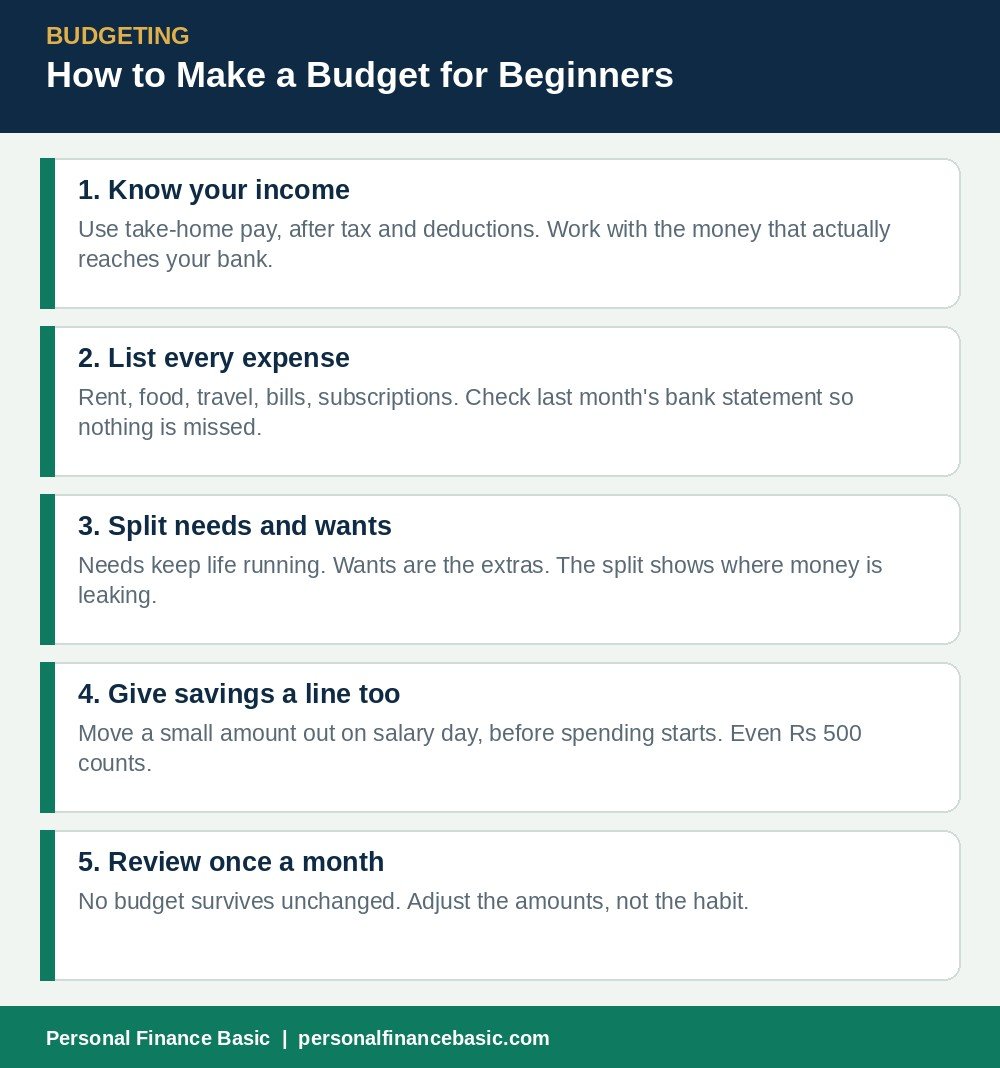
1. Figure out what you actually take home
Use the amount that hits your bank account after taxes and deductions, not your salary. If you’re paid every two weeks, multiply one paycheck by 26 and divide by 12. That gives you a real monthly number (and explains why some months feel like they have a “bonus” paycheck).
If your income goes up and down, use a low month. Running a small business taught me that budgeting on your best month is how you end up short in a slow one. Plan on the low number and treat anything above it as extra.
2. Write down the bills that don’t change
Rent or mortgage, car payment, insurance, phone, internet, minimum debt payments, subscriptions. These are the easy part, since they’re roughly the same every month.
3. Look at what you really spent last month
This is the part people skip, and it’s the most useful. Go through two or three months of bank and card statements and put each purchase into a rough group: groceries, gas, eating out, shopping, and so on.
Don’t judge it yet. Just get the numbers. Most people find at least one category that’s much bigger than they thought. For a lot of us it’s food delivery.
4. Add the stuff that only shows up once or twice a year
Car registration, holiday gifts, annual memberships, school supplies, the yearly insurance bill. These are what wreck a budget that looked fine on paper.
Add them up for the year, divide by 12, and set that much aside each month. Some people call this a sinking fund. I just think of it as paying December’s bills a little at a time.
5. Subtract and see where you land
Income minus everything above. If there’s money left over, decide now where it goes: savings, an emergency fund, or extra debt payments. Money without a job tends to get spent.
If you’re in the negative, you’re not alone, and it’s fixable. Start with the flexible categories (food, shopping, entertainment) because they’re easiest to change. Then look at bigger bills like insurance and your phone plan. There are more ideas in this list of ways to save money every month.
6. Check in once a week
Ten minutes, same day each week. Compare what you planned with what you spent. At the end of the month, adjust next month’s numbers.
Your first budget will be wrong. Mine was. It usually takes two or three months before the numbers match real life, so don’t give up after month one.
What a simple budget looks like
Here’s an example for someone taking home $4,000 a month:
| Category | Monthly |
|---|---|
| Rent | $1,300 |
| Utilities, phone, internet | $250 |
| Groceries | $450 |
| Car payment, gas, insurance | $500 |
| Minimum debt payments | $200 |
| Personal and fun money | $350 |
| Yearly expenses (set aside) | $150 |
| Emergency savings | $400 |
| Extra debt payment | $200 |
| Retirement | $200 |
| Total | $4,000 |
Every dollar has somewhere to go. That’s the idea behind zero-based budgeting, and it’s a good habit even if you don’t follow it strictly.
Which budgeting method should you use?
Whichever one you’ll keep doing. A few options:
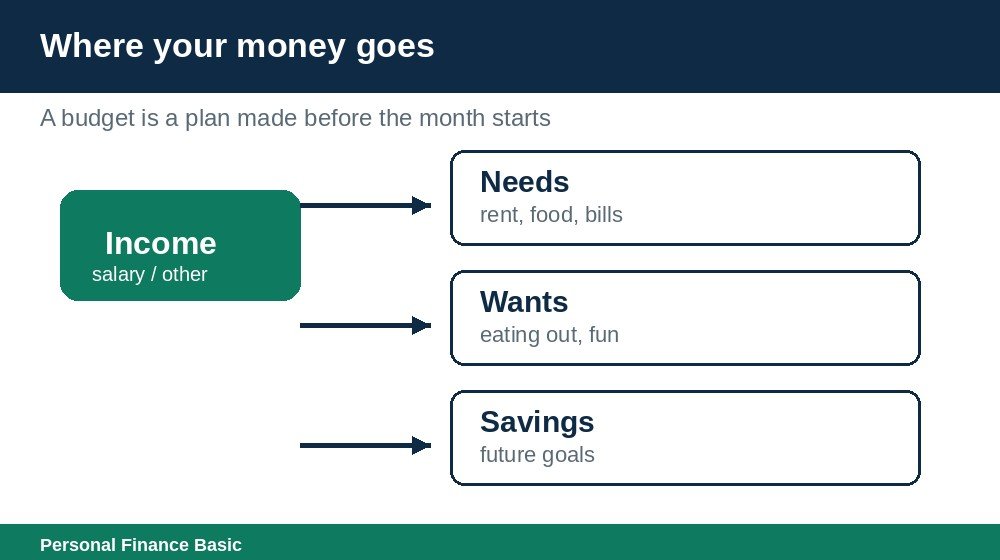
- The 50/30/20 rule splits take-home pay into needs, wants and savings. Good if you hate tracking details.
- Zero-based budgeting gives every dollar a job. More work, more control.
- The envelope method uses cash for categories like groceries. When the envelope’s empty, you’re done for the month. Helpful if cards make overspending too easy.
You can track any of these in a notebook, a spreadsheet, a budgeting app, or the spending breakdown many banking apps now include for free.
Why budgets usually fail
From what I’ve seen, it’s almost always one of these: the budget is so strict there’s no fun money at all, yearly expenses weren’t planned for, there’s no emergency savings so one surprise bill blows it up, or one bad month made it feel pointless.
Leave a little room for things you enjoy. Plan for the irregular stuff. And if a month goes sideways, just adjust and keep going.
At a glance
Quick questions
How much should I spend on groceries?
It depends on your household and where you live. The easiest starting point is your own average from the last three months, then try to trim 5 to 10 percent with a list and some meal planning.
What if my income changes every month?
Budget on your lowest normal month. In good months, save the extra so it can cover the slow ones.
Is an app better than a spreadsheet?
Not necessarily. Apps save time by importing transactions automatically. Spreadsheets give you more control. Use whichever you’ll actually open.
I’m not a financial advisor, and this post is general information, not advice for your situation. More in the disclaimer.

Comments
3 responses to “How to make a budget for beginners (step by step)”
[…] well and ask for honest feedback. That is the whole plan. Once you have a little extra coming in, a budget helps you decide where it goes, and an emergency fund is a sensible first home for it, before […]
[…] month even if you pay in full later. If you want a simple way to track what you owe, start with how to make a budget. A budget does not raise a score by itself, but it makes it easier to pay on time and to keep […]
[…] reading: How to make a budget for beginners (step by step) and The 50/30/20 budget rule, explained with […]