
Groceries are one of the few bills you can change this week. Rent and the car payment are fixed, but the grocery bill moves with every choice you make in the store. That makes it the best place to start when money feels tight.
The trick is to cut the waste, not the food. Most households overspend because they shop without a plan, buy the same item twice, throw food away, and pay full price for things that have a cheaper twin one shelf down. Fix those habits and the bill drops on its own.
What the average household actually spends
Before you set a target, it helps to know the national picture. The Bureau of Labor Statistics Consumer Expenditure Survey for 2024, the latest full year available, found the average American household spent $6,224 on food at home during the year, about $519 a month. Total food spending was $10,169 a year, because the average household also spent $3,945 on food away from home.
Averages hide a lot: a single person spends far less than a family of five, and prices differ by city. But $519 a month is a useful starting point. If your spending is well above it, there is room to cut. If it is below it, the steps below can still help you hold the line.
Start with your real number
Most people guess their grocery spending, and most guesses are low. Add up every grocery purchase from the last four weeks using bank or card statements, and count only food and drinks. Cleaning products and toiletries often land in the same trip, so split them out. They belong in a household budget, not the food budget.
Once you have the number, set a target 10 to 15 percent lower. A household spending $600 a month would aim for $510 to $540, a cut of $60 to $90 a month. A 10 percent cut is small enough to reach without changing what your family eats, and large enough to matter. Write it down and check it once a week.
Where a $600 example budget can shrink
Here is what a cut looks like in practice. This example household spends $600 a month on groceries and trims $105 from it, about 17 percent, without skipping a meal. The biggest savings come from snacks, drinks, and extras, where impulse buys live. Meat is next, at $30 off the month.
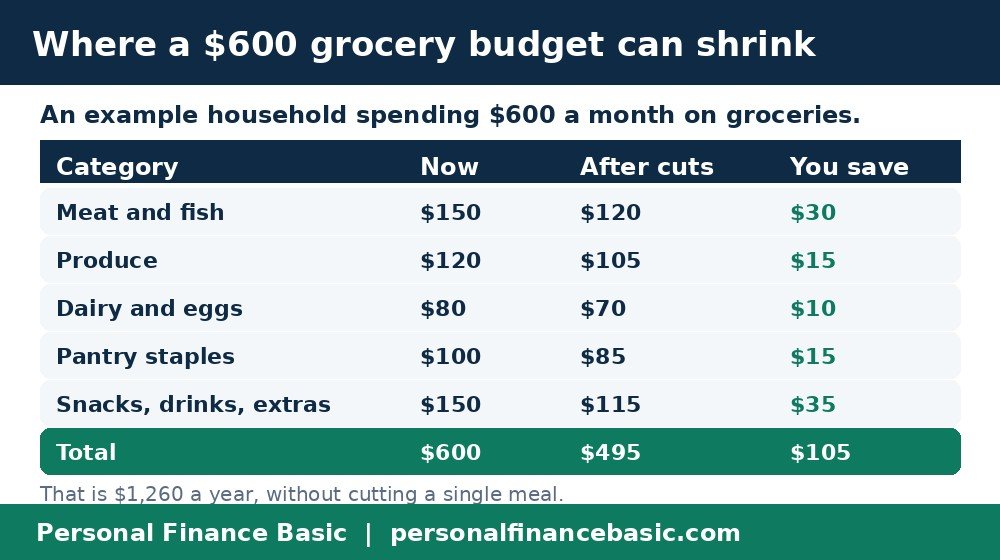
An example $600 grocery budget, cut to $495 a month.
Your split will look different, but small cuts in five places add up to more than $100 a month, and none of them means eating less.
Plan meals before you shop
The single habit that saves the most money is planning five dinners before you go to the store. Not seven: five leaves room for leftovers and one takeout night. Write the five meals down, check what you already have, and build the shopping list from the gap. A list built from a plan buys what the week needs and nothing else.
Shop once a week. Every extra trip adds items that were never on a list. A small top-up for milk is fine, but a full second shop is where the budget leaks. One weekly shop also wastes less, because every item has a meal attached to it.
Cook in batches when you can: a pot of soup on Sunday covers two or three lunches.
Swap, do not skip
Cutting your grocery bill does not mean cutting foods you like. It usually means swapping the version you buy. Store-brand staples such as flour, rice, oats, canned beans, and pasta cost less than the name brand, and the difference on a weekly shop can be $10 to $20.
Meat is the most expensive part of most grocery bills, so it is the best place to swap. Cheaper cuts like chicken thighs or pork shoulder cost less per pound than steaks and work well in slow-cooked meals. Two meat-free dinners a week, built on beans, lentils, eggs, or pasta, cut the meat bill by a quarter or more.
Frozen produce is another easy swap. Frozen vegetables and berries cost less than fresh out of season and do not go bad in the fridge. Buy fresh when it is cheap and in season, and use frozen for the rest.
Buy pantry staples in larger packs when the price per unit is lower and you will use them before they expire. Rice, oats, and dried beans keep for months, but do not stock up on anything that spoils fast, no matter how good the deal looks.
Use what you buy
The US Department of Agriculture estimates that 30 to 40 percent of the food supply is lost or wasted, and a large share of that waste happens in homes. Food you buy and throw away is the most expensive food there is.
Three habits fix most of it. Eat leftovers first: put them at the front of the fridge and plan one leftover night a week. Second, learn the difference between “use by” and “best before” dates: the second is about quality, not safety. Third, freeze food before it goes bad. Bread, meat, cooked rice, and most vegetables freeze well.
Check the fridge before you shop, every time. If you already have three open jars of sauce, you do not need a fourth. A two-minute check saves more money than any coupon.
Keep the treats in the budget
A grocery budget with no room for treats rarely lasts a month. If the plan bans every snack and drink you enjoy, you will break it by the second week. The plan was too strict, not you.
Give treats a fixed amount instead: $25 to $40 a month for snacks, drinks, and small extras. When the treats money runs out, it runs out until next month.
The same idea works for takeout. One planned takeout night a week, inside the budget, costs far less than three unplanned ones.
At a glance
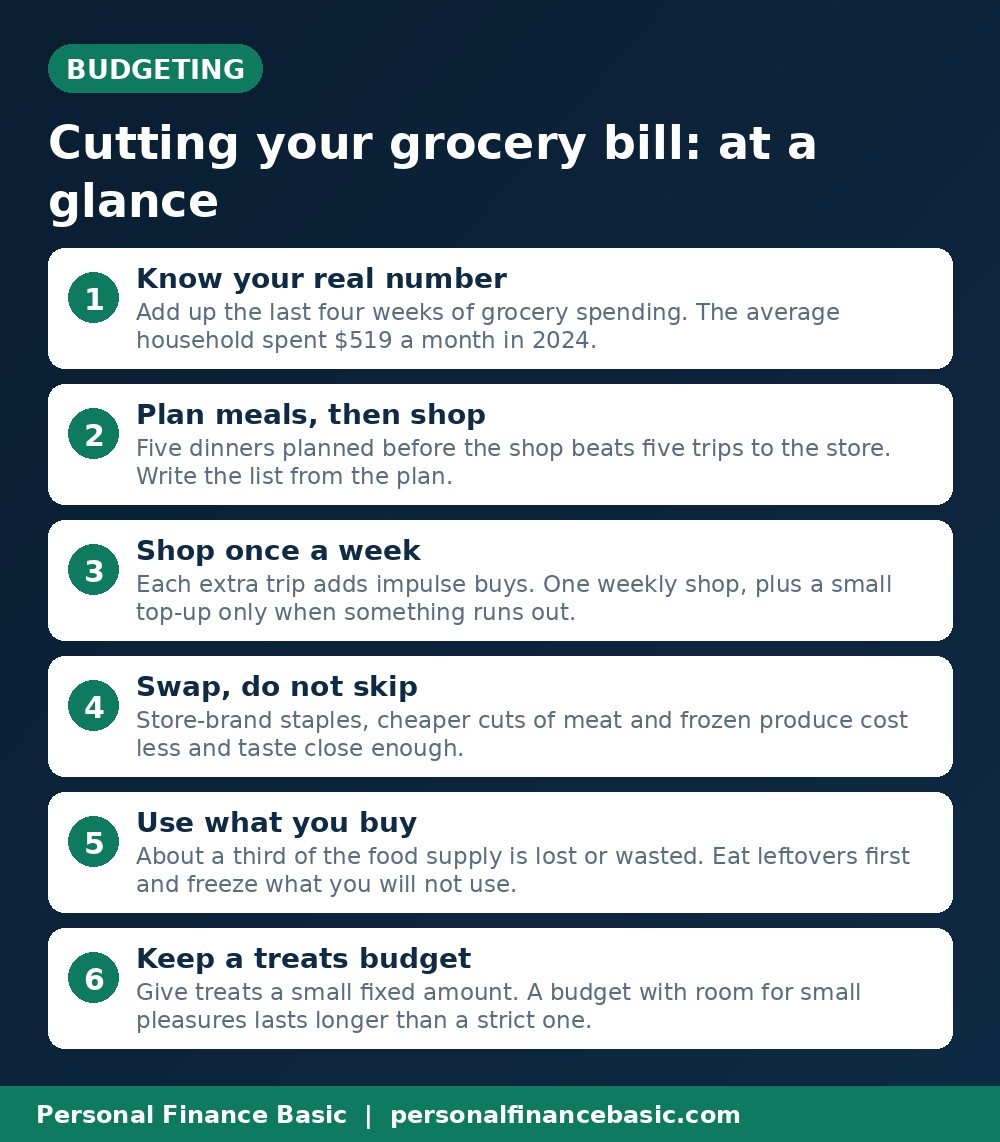
The main points from this guide, in one picture.
Frequently asked questions
How much should a family of four spend on groceries?
There is no single right number. The Bureau of Labor Statistics average was $519 a month on food at home in 2024, but a family of four usually spends more. Start from your own four-week total, then aim 10 to 15 percent lower.
Do store-brand foods really save money?
Yes, on staples. Store-brand flour, rice, oats, beans, and pasta usually cost less than the name brand for the same ingredients. Try one or two items first before switching the whole list.
Is meal planning worth the time?
Yes. Planning five dinners takes about 20 minutes and stops the extra trips that add impulse buys. It also cuts waste, because every item you buy has a meal attached to it.
What is the fastest way to cut $100 from a grocery bill?
Cut snacks, drinks, and extras first, then shop once a week instead of three or four times. In the $600 example here, those two changes save about $60 a month.
How do I stop throwing food away?
Eat leftovers first, freeze food before it goes bad, and check the fridge before you shop. The USDA estimates 30 to 40 percent of the food supply is lost or wasted, and much of that waste happens at home.
This guide is general education, not financial advice. Food prices and your household’s needs will change what works for you. Consider speaking with a qualified financial adviser about your own situation.
Related reading: The 50/30/20 Rule With US Examples ($3,000 a Month) and How to Budget When Your Income Changes Every Month