
Your CIBIL score is a three-digit number between 300 and 900 that sums up your credit history in India. Lenders use it, along with your income and other checks, when they decide on a loan or credit card application. You cannot raise it overnight. Steady, simple habits over a few months can make a real difference, though. This beginner guide explains how it works and gives you a realistic six-month plan.
What your score is, and is not
A higher score usually points to a history of borrowing and repaying on time. It does not guarantee approval, and a lower score does not automatically mean rejection. Lenders also look at income, employment stability, existing EMIs, and bank statements. If you are new to credit, read How Much Loan Can I Get If My CIBIL Score Is 0?. A score of 0 is not a bad score. It simply means there is not enough history yet.
The seven habits that build a score
1. Pay every EMI and card bill on time, in full
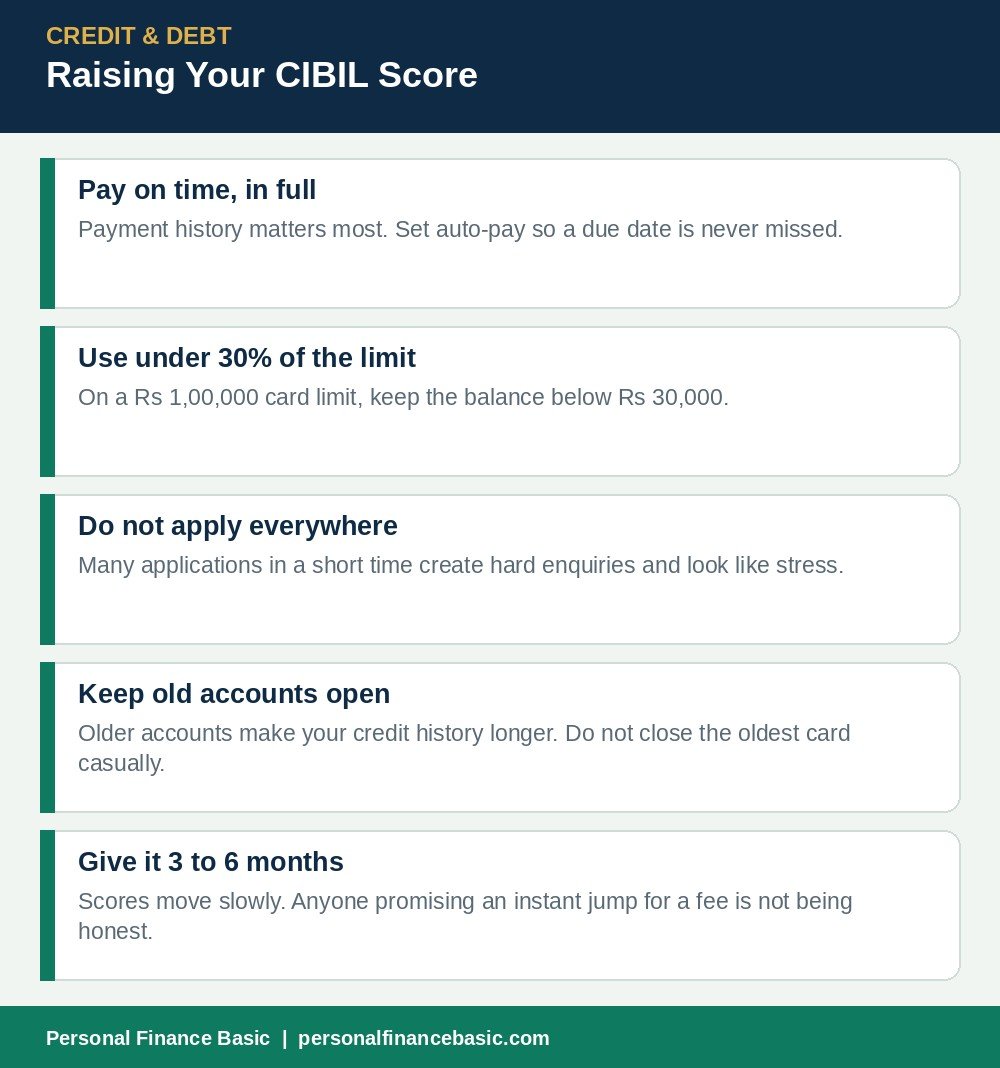
Payment history matters most. Even one late payment can hurt. Set up auto-pay for at least the minimum due, and pay the full card bill whenever you can, so interest does not pile up.
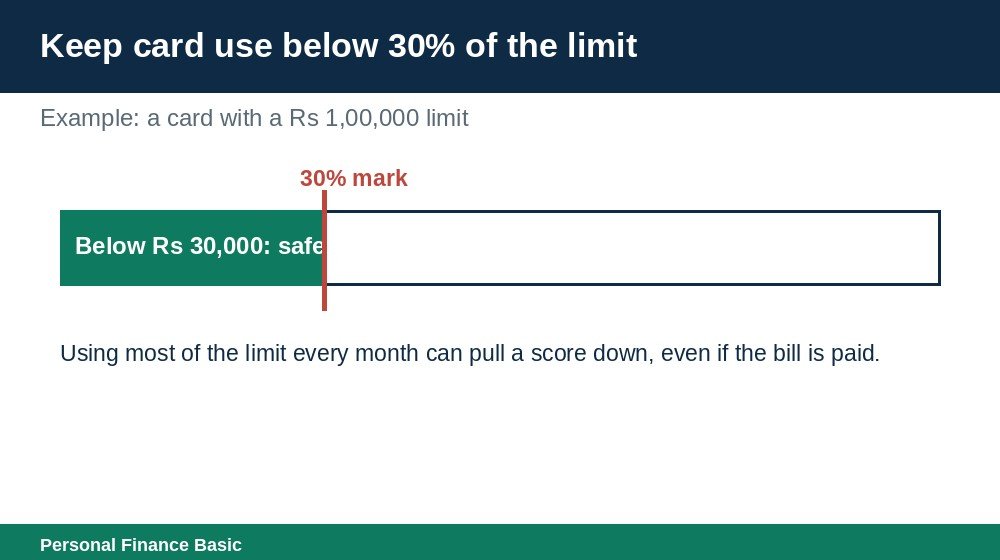
2. Keep credit utilisation below 30%
Utilisation is how much of your credit limit you are using. If your card limit is ₹1,00,000, try to keep the balance below ₹30,000, and lower if possible. Using a card heavily every month, even if you pay it off, can still look risky to lenders.
3. Do not apply for many loans at once
Each application can lead to a hard enquiry on your report. Several applications in a short period can look like financial stress. Apply only when you genuinely need credit, and compare options before you apply, rather than after.
4. Keep older accounts open
Older accounts lengthen your credit history. Closing your oldest card just because you rarely use it can shorten that history. If there is no annual fee problem, keeping it open with occasional small, paid-off use is usually better.
5. Keep a sensible credit mix
A mix of secured and unsecured credit, used responsibly, can help over time. Do not take a loan just to create a mix. The mix should follow genuine needs, not the other way round.
6. Build history with a secured card or a small loan
If you have no history, a secured credit card, backed by a fixed deposit, or a small loan repaid on time can start building it. Use a small amount, pay in full, and never spend money you cannot repay.
7. Check your report and dispute errors
Mistakes happen. A payment can be marked late when it was on time, or an account that is not yours can appear. Check your report regularly, and raise a dispute with the credit bureau if you find an error, with any proof you have.
Your realistic 6-month action plan
| Month | What to do |
|---|---|
| Month 1 | Get your credit report. Note every account, balance and any error. Set up auto-pay for all bills. |
| Month 2 | Bring utilisation below 30%. Dispute any genuine errors you found. |
| Month 3 | Keep paying on time and in full. Do not apply for new credit unless truly needed. |
| Month 4 | Review the report again. Confirm disputes were resolved and balances are falling. |
| Month 5 | Keep older accounts open. Avoid new applications and keep spending within your budget. |
| Month 6 | Check your report and score again. You should now have six months of consistent behaviour to show. |
Improvement usually takes months of consistent behaviour, typically 3 to 6 months or more before you see clear movement, not days. Anyone promising an instant score jump for a fee should be treated with caution.
Mistakes that lower your score
The common mistakes are easy to list, and easy to slip into. Missing EMI or card payments, even by a few days, hurts. Paying only the minimum on a credit card while the balance keeps growing hurts too. So does maxing out cards regularly, applying for several loans or cards in a short period, closing your oldest credit card without a good reason, and ignoring your credit report, so errors stay uncorrected.
How to check and dispute your report
You can request your credit report from CIBIL and the other credit bureaus. Check your personal details, each account, the payment history, and any enquiries. If something is wrong, raise a dispute through the bureau’s official process, explain clearly what is incorrect, and attach supporting documents, such as payment receipts or bank statements. Keep a copy of everything you send, and follow up if you do not hear back.
At a glance
Frequently asked questions
How long does it take to increase a CIBIL score?
There is no fixed timeline. With consistent on-time payments and low utilisation, many people see movement over 3 to 6 months or more. Larger problems, such as settled accounts or long defaults, take longer to fade.
Does checking my own score lower it?
No. Checking your own report is a soft enquiry and does not lower your score. Lender applications are different. Those are hard enquiries.
Can I pay someone to fix my score quickly?
Be very cautious. No one can legally erase genuine negative history overnight. You can dispute genuine errors yourself, for free, through the bureau.
Is a secured card a good way to start?
For many beginners, yes, because the deposit reduces the lender’s risk and you can build a payment record. The key is the same: small spending, paid in full, every month.
What score should I aim for?
Focus on the habits, not a magic number. A score that rises steadily because you pay on time and use credit lightly is worth more than chasing a specific figure. Lenders set their own criteria, so there is no single score that guarantees approval.
Start with one habit this month: set up auto-pay, and check your report. Keep at it, and the score has a reason to move.
This guide is for education only and is not financial advice. Credit scoring rules and lender policies can change, so check the latest information from the credit bureau and your lender. If debt is becoming unmanageable, also read Debt snowball vs. debt avalanche: which should you use?

Comments
2 responses to “How to Increase Your CIBIL Score: A Step-by-Step Beginner Guide”
[…] the longer-term plan, read How to Increase Your CIBIL Score: A Step-by-Step Beginner Guide, which includes a realistic six-month action […]
[…] a longer plan to build a score step by step, read How to Increase Your CIBIL Score. If you are new to credit and have little or no history, read How Much Loan Can I Get If My CIBIL […]