Your CIBIL score is a record of how you have handled credit in the past. Lenders look at it when you apply for a card or a loan. It does not change because of one small slip, but a few repeated habits can pull it down over months. The good news is that most of the damage comes from habits you can change.
Below are seven common mistakes, what actually happens when you make them, and what to do instead. None of these needs a new product or a paid service. They need steady habits and a regular check of your statement.
The 7 mistakes
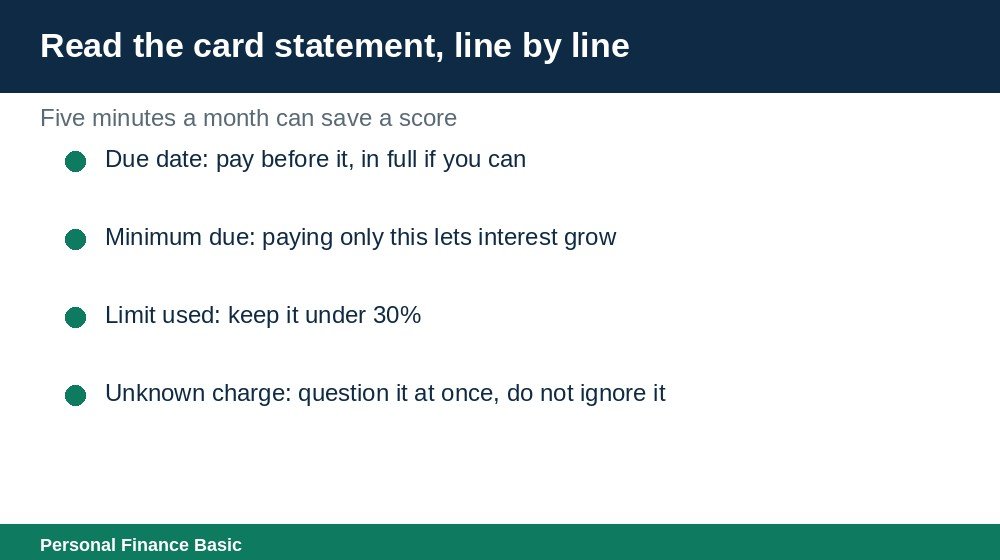
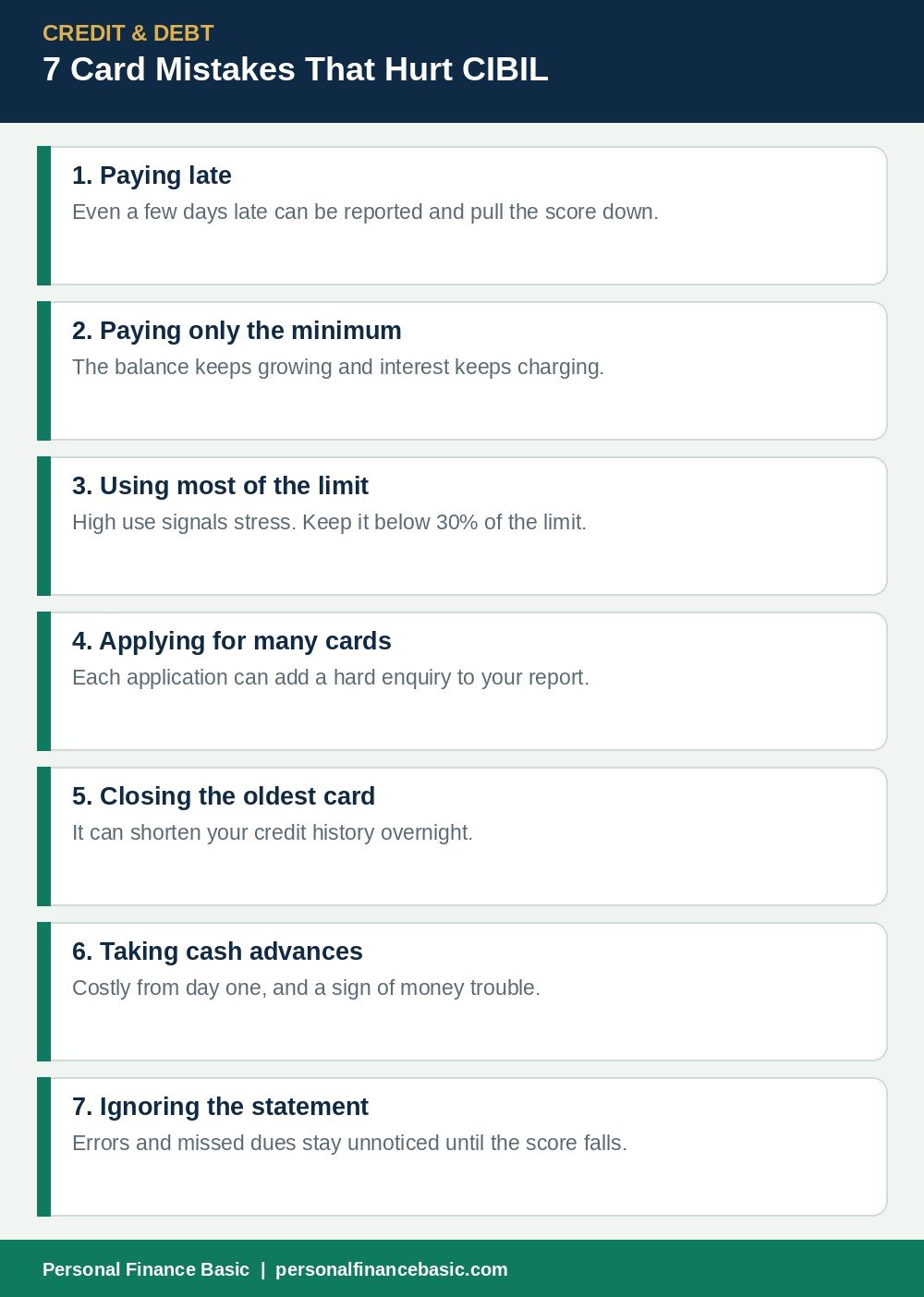
- Paying late, even by a few days, can be reported as a late payment. That record stays on your credit report and can lower your score, even if you pay the full amount a week later. Set up auto-pay for at least the minimum due, and set a reminder a few days before the due date, so a busy week does not turn into a late payment.
- Paying only the minimum due keeps the account current, but the rest of the balance carries forward and interest is charged on it. The balance can grow month after month, even if you stop spending. Pay the full bill when you can. If you cannot pay in full one month, pay as much above the minimum as you can, and cut card spending until the balance is cleared.
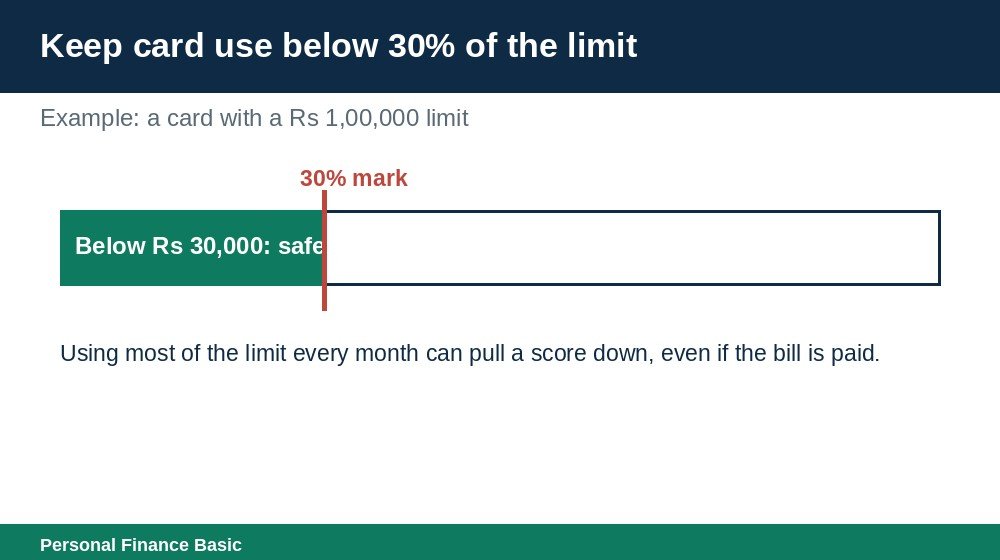
- Using most of the limit each month can hurt your score, even if you pay on time. Lenders look at how much of your limit you use. Try to keep use below 30% of the limit. For example, if your limit is ₹1,00,000, try to keep the balance below ₹30,000. If you need to spend more, pay part of the bill mid-month, or ask for a higher limit only if you will not spend more because of it.
- Applying for several cards or loans in a short period leads to several hard enquiries on your report. A hard enquiry happens when a lender checks your report for an application. One on its own is normal. Several in a short time can look like you are short of money, and can lower your score. Space out applications, and apply only when you have a clear need.
- Closing the oldest card without a reason can shorten your credit history. Older accounts show a longer record of borrowing and repayment, which lenders like to see. If the card has no large annual fee and you can keep it safe, it is often better to keep it open and use it for a small purchase now and then, paid in full. Close a card if the fee is high or you cannot control spending on it.
- Taking cash advances on the card is expensive and can signal stress to lenders. Cash advances usually carry fees and interest from the day you take the cash, with no interest-free period, and the rates are generally high. The exact charges vary by card, so check your card terms. If you need cash urgently, look at cheaper options first, such as your savings or a planned loan, rather than a card cash advance.
- Ignoring the statement and the credit report means errors and missed dues go unnoticed. A payment you made may be marked late by mistake, or an account you do not recognise may appear. Read your statement each month, check the due date and the total due, and check your credit report a few times a year. If you find an error, raise a dispute with the bureau and the lender, and keep proof of your payment.
Checking your own report does not hurt your score
Many people avoid checking their report because they think it will lower their score. Checking your own report is a soft enquiry, and it does not lower your score. Hard enquiries, which come from lender applications, are different. So there is no reason to avoid your own check. In fact, regular checks help you catch errors early, before they do lasting harm.
For a longer plan to build a score step by step, read How to Increase Your CIBIL Score. If you are new to credit and have little or no history, read How Much Loan Can I Get If My CIBIL Score Is 0? to understand what a score of 0 means.
If you have already made one of these mistakes
Do not panic, and do not try to hide the problem by taking another card or loan. Start by paying the next bill on time and in full, if you can. Then bring the balance down month by month, keep use low, and avoid new applications for a while. A single late payment will matter less as months of on-time payments build up behind it. If a balance feels too large to clear soon, talk to your card issuer about a repayment plan, and look at your monthly spending to find room for extra payments. Small, steady steps are what lenders and credit reports record over time.
At a glance
Frequently asked questions
How fast can a late payment hurt my score?
A payment reported late can show on your report soon after the due date passes. Pay on time, every time, to avoid this.
Does paying the minimum due protect my score?
It keeps the account current, but interest builds up and high use can still hurt your score. Pay in full when you can.
Is 30% use a strict rule?
No, it is a useful guide. Lower use is generally better, but paying on time matters most.
Can I fix my score quickly?
No, genuine history cannot be erased overnight. Steady on-time payments over months are what change it.
Should I close cards I do not use?
Not always. Closing an old card can shorten your history. Keep it open if the fee is low and you can manage it.
Pick one habit from this list and start this month. Paying on time and in full, and keeping use low, will do more for your score than any quick fix.
This article is for education only and is not financial advice. Credit scoring rules and lender policies vary and change over time. Check your credit report and card terms for details that apply to you.